Logan Paul Defends Jake Paul’s Boxing Strategy Against Anthony Joshua
Jake Paul’s loss to Anthony Joshua sparked instant debate, but Logan Paul wasted no time stepping in to clear the air. Following the high-profile heavyweight clash in Miami, criticism centered on Jake Paul’s movement inside the ring.
Logan Paul, speaking openly on the podcast “Impaulsive,” pushed back on claims that his brother avoided engagement and explained why the approach made sense against a fighter like Joshua.
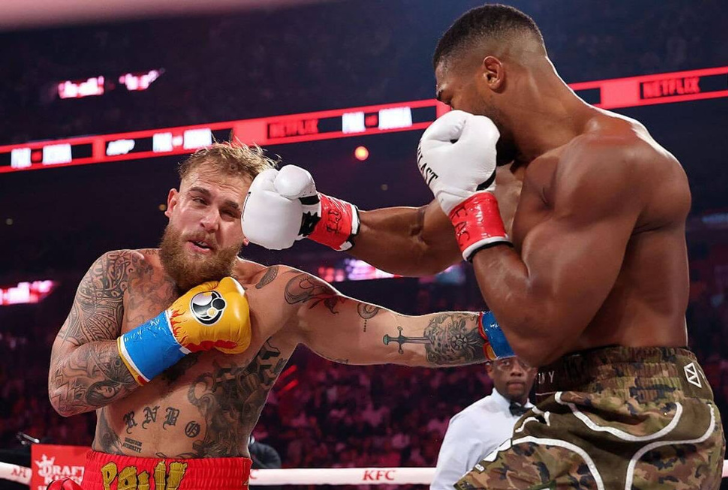
Jake Paul entered the bout with a 12-2 record and faced one of the most powerful punchers in modern boxing. Anthony Joshua, a former two-time unified heavyweight champion, improved his record to 29-4 after scoring a Round 6 TKO. The fight saw Paul knocked down four times, absorbing heavy shots early and often.
Despite the outcome, the post-fight conversation focused less on the result and more on Jake Paul’s movement. Some viewers labeled it running. Logan Paul disagreed.
Logan Paul Explains The Strategy
Instagram | ejsportsmedia | Logan Paul defended Jake’s movement against Joshua on the “Impaulsive” podcast.
On “Impaulsive,” Logan Paul addressed the criticism directly, pointing out that many fans misunderstand high-level boxing fundamentals.
“For everyone wondering about Jake’s strategy, most people don’t know boxing,” Paul said. “Moving around the outside, everyone’s saying, ‘Oh, he ran the whole time,’ no, that’s boxing. That’s what Floyd Mayweather built his career off of.”
Logan stressed that facing a larger opponent who controls the center of the ring changes everything. Against a powerhouse like Joshua, standing still invites damage.
“Especially when you’re facing a bigger guy who controls the center of the ring, the only way to properly win is to stay on your horse, pivot, switch directions, and make him miss,” he added. “That’s the name of the game. That’s elusiveness. That’s evasion. That’s good.”
The Knee-Drop Tactic That Drew Attention
Another moment that raised eyebrows involved Jake Paul dropping to one knee when Joshua leaned on him in close quarters. Some believed it was an attempt to force a takedown. Logan Paul offered a different explanation, based on what he had already seen in training.
“The one thing I did see Jake doing in sparring, that everyone else saw last night, when Anthony Joshua would lean on Jake, he would go to his knee,” Logan said.
He recalled asking his brother about it during sparring sessions.
“I asked him, ‘Why do you keep going to your knee when the big guy is above you and leans on you?’ He said, ‘They’re so heavy, me trying to hold them up wastes so much energy.’”
According to Logan, the move was about efficiency, not optics.
“If I’m under them and they start leaning on me, I’m just going to drop to my knee, because why would I waste energy trying to keep them up?” he explained. “It’s a strategy that optically looks very bad, but it’s conservation of energy.”
Respect For Toughness Under Fire
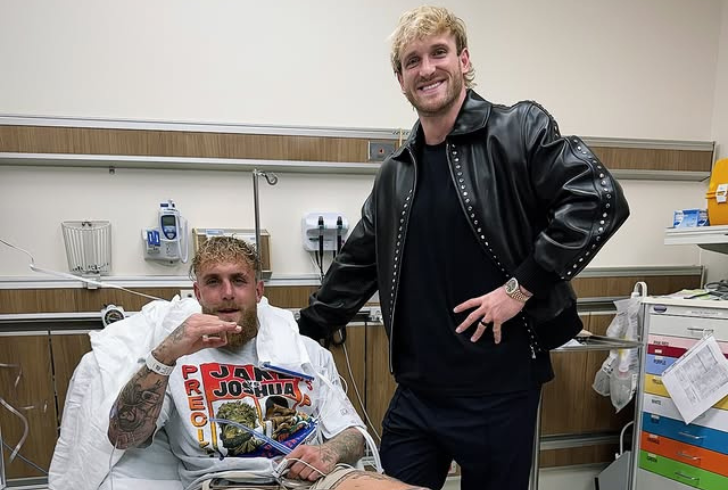
Instgram | loganpaul | Logan Paul praised Jake’s grit for fighting through a double-broken jaw.
Beyond strategy, Logan Paul highlighted something he felt could not be argued: Jake Paul’s durability. The fight left Jake with a broken jaw in two places, yet he continued after suffering multiple knockdowns.
“I think one thing that is undeniable is your chin,” Logan said. “Anyone who questioned whether or not you had a chin, I think the answer to that question was proven last night.”
He emphasized the level of power Jake faced.
“Anthony Joshua hits you with probably his hardest shot that we’ve seen drop every other single fighter that he’s fought, and he hit you in the face, and not only did you not get knocked out, but you also dropped and said, ‘Wow.’”
From Logan Paul’s viewpoint, the criticism overlooks key context. Anthony Joshua’s size and control dictated a defensive, movement-based approach from Jake Paul, aimed at conserving energy and staying competitive.
The fight also underscored the difference between a rising boxer and a proven champion. Jake Paul’s movement, stamina management, and toughness shaped the night, adding another chapter to his boxing journey and sparking debate over how in-ring strategy is evaluated.